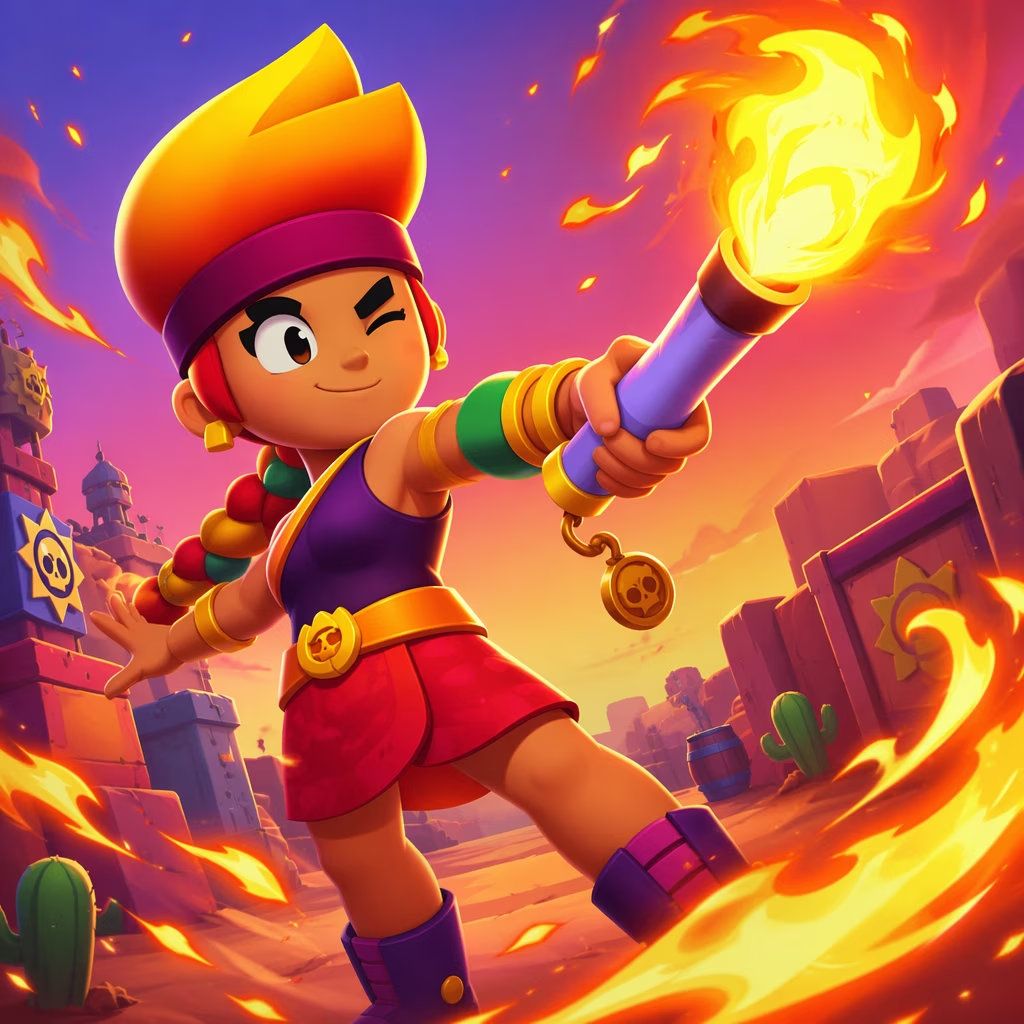
It was the kind of announcement that made experienced players spit out their energy drinks. In the spring of 2026, Supercell dropped a bombshell on the Brawl Stars universe: a brand‑new boss creature with a healing rate of 100,000 health points per second. The number alone was enough to make even the most battle‑hardened veterans do a double‑take. Overnight, forums and Discord servers lit up like a pinball machine, the collective disbelief echoing through cyberspace. Players who had breezed through legendary raids and shrugged off meta shake‑ups suddenly found themselves in unfamiliar territory—a boss that could regenerate faster than a full team could pour on damage, turning every fight into a frantic race against an ever‑replenishing green bar.
The immediate reaction was a cocktail of outrage, sarcasm, and sheer bewilderment. One user summed it up by declaring that the devs “ain’t hiding their glazing anymore,” a cheeky way of saying Supercell had stopped pretending their designs were grounded in anything resembling fair play. The phrase caught fire, becoming the unofficial slogan for a player base that felt sucker‑punched. It wasn’t just the healing; it was the brazenness of it. In a game where timing and burst damage are everything, a healer that could shrug off a Hypercharge combo in a split second felt less like a challenge and more like a practical joke.
Comparisons to famously punishing titles started flying faster than a Shelly super. “They weren’t kidding when they said it’d be harder than FromSoftware games like Elden Ring,” one player quipped, and yet the comparison was a backhanded one. In Elden Ring, difficulty is layered with patterns to learn and tells to exploit; here, the boss simply sponged up damage without any discernible skill gate. It wasn’t a dance of dodging and striking—it was a wall. Another voice pointed out that the real boss wasn’t just the monster, but the parade of randoms who would pick Edgar and die two seconds into the encounter, adding a layer of public‑matchmaking frustration to an already insurmountable task. The community found itself trapped in a perfect storm of design skepticism and teammate trust issues.
Then came the reward reveal, and the whole saga tipped into absurdity. For toppling this regenerative leviathan, players were rumored to receive… one sushi roll. Yes, a single virtual piece of sushi. The news landed like a bad punchline. “All that effort for a sushi roll?” became the rallying cry, and memes flooded social media showing brave brawlers climbing a mountain only to find a sad little maki waiting at the summit. It was the kind of reward that made you wonder if Supercell was winking at their own game or just trolling the community with a straight face. The comedy wasn’t lost on anyone—players began joking that they’d rather face the boss in real life if it came with a decent lunch—but the underlying sting was real. Effort versus payoff is the heartbeat of any live‑service game, and this felt like a flatline.
Despite the clown‑show vibe, the Brawl Stars community is nothing if not resourceful. Almost immediately, strategy threads began popping up like mushrooms after rain. Combos like Amber, Tick, and Nita emerged as potential saviors, leveraging area denial and pet pressure to out‑pester the pesky healer. The theory was that if you could layer enough sustained damage and keep the boss pinned, maybe—just maybe—you could outpace the regeneration. Players who had long since mastered every brawler’s nuances started crunching numbers and sharing replays, turning the salt mine of the initial reaction into a collaborative workshop. “If you nail the right combination,” one optimist posted, “we might actually pull this off before it fully powers up.” It was the classic gamer reflex: when the odds are stacked, you don’t just rage—you engineer.
Still, a shadow of doubt lingered. Even with the most creative synergies, the math felt unfair. One misstep, one second of downtime, and all progress would vanish like mist. The healing rate was so absurd that it almost made players nostalgic for the days when a boss with 10,000 HP recovery per tick was considered “overtuned.” Now, 100K was the new normal, and the jump was enough to give anyone whiplash. Some players threw in the towel, declaring they’d sit this one out until a nerf inevitably arrived. Others leaned into the madness, viewing the whole situation as a badge of honor—if you could beat it, you weren’t just a Brawler, you were a legend. The sushi roll became a weird sort of meta‑trophy: a symbol of surviving the unthinkable.
The boss eventually settled into the game’s lore as both a cautionary tale and a testament to player tenacity. The great healing debacle of 2026 reminded everyone that balancing is an art, not a science, and that sometimes developers test the waters by throwing their community into the deep end with nothing but a pool noodle. It also proved that Brawl Stars’ fans would rather laugh, strategize, and meme their way through a crisis than walk away. Whether the sushi roll was ever worth it is beside the point. The real reward was the chaos, the camaraderie, and the collective story that would be retold in clubs and Discord voice chats for years to come—a story of a boss that healed faster than the speed of light and the players who chased it anyway, sushi in hand.
This assessment draws from Rock Paper Shotgun, a long-running outlet known for unpacking how difficulty, balance, and player psychology intersect in modern games. Seen through that lens, Brawl Stars’ “100,000 HP per second” healing boss reads less like a traditional skill check and more like a stress test of sustained DPS, coordination, and error tolerance: if regeneration invalidates meaningful progress after even brief downtime, the encounter risks collapsing into a binary of “exploit the right comp” or “don’t bother.” Pairing that with a deliberately meager prize (the infamous single sushi roll) also spotlights a core live-service tension—rewards don’t just motivate participation, they communicate respect for player time—so even a meme-worthy payoff can amplify backlash when the underlying tuning feels intentionally unreachable.
Comments