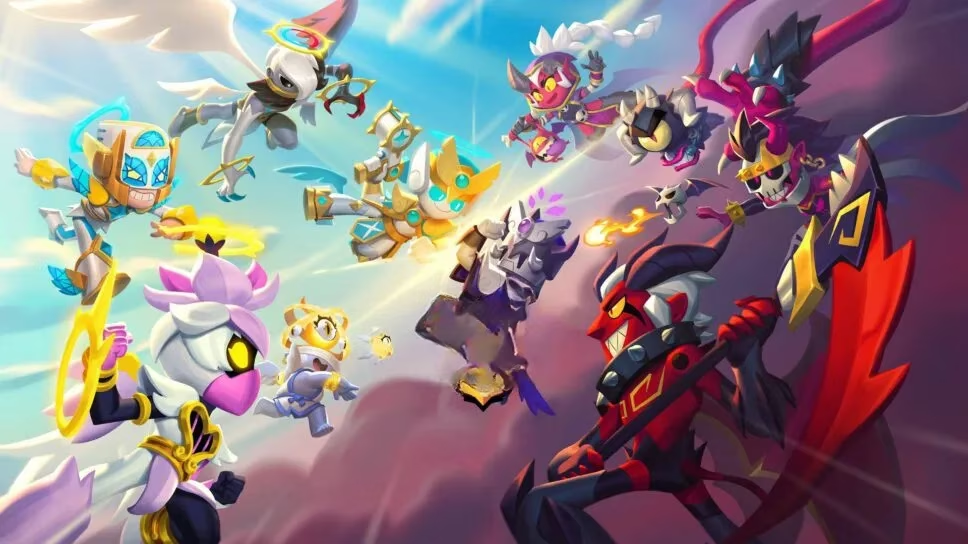
I still remember the morning I opened Brawl Stars during the Angels vs Demons season and saw the notification: I had been chosen as an Angel. The mysterious Codex of Doom sat on the left menu, sealed and tempting. 'Don't tap it,' they said. Who listened? Not me. Inside were six Angelic abilities and six Demonic ones, each capable of flipping a match. Now, in 2026, looking back at that event, I realize it was one of the best lessons in Brawl Stars history about how power-ups, game modes, and team roles interact. The original season ended on Dec. 5, 2024, so you cannot play it today, but the design lessons still matter for any seasonal modifier.
How the Codex of Doom Worked
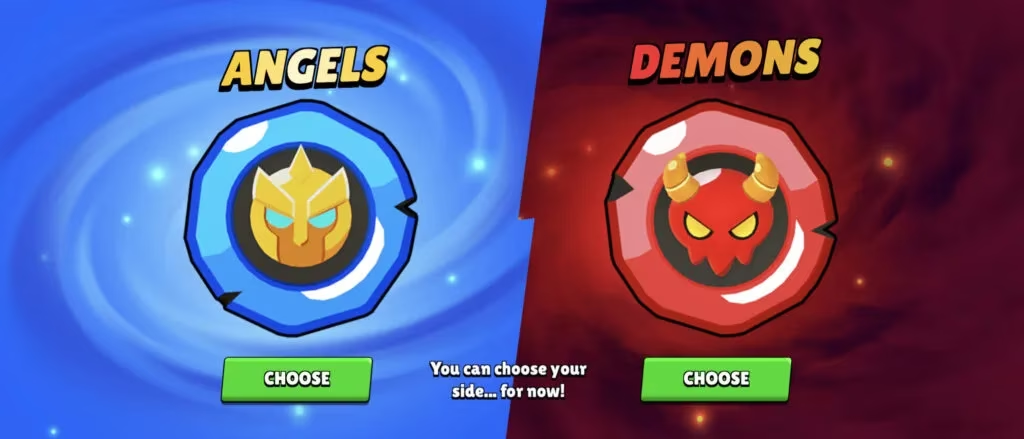
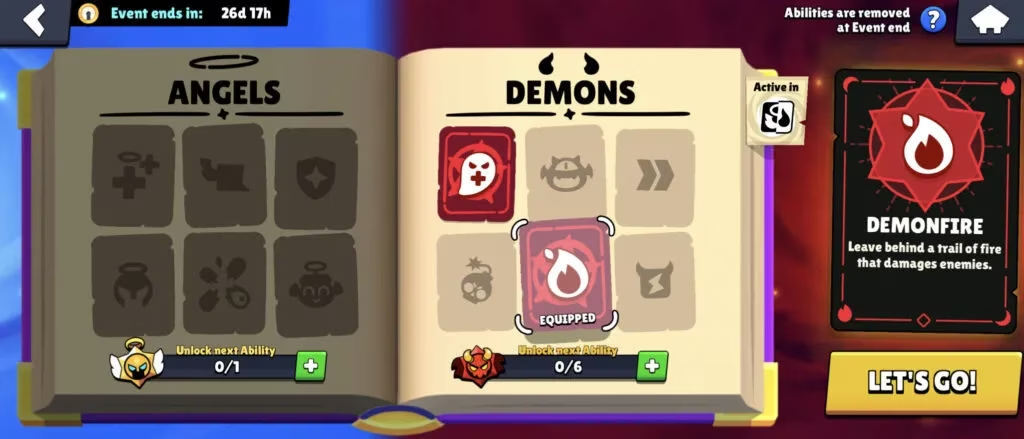
Each new game day, Brawl Stars randomly assigned me to Angels or Demons. On weekends, I got a free choice, which felt like a small mercy. The side changed the lobby atmosphere and gave me access to a special set of abilities. Only one ability could be active at a time, so choosing wisely mattered more than collecting everything.
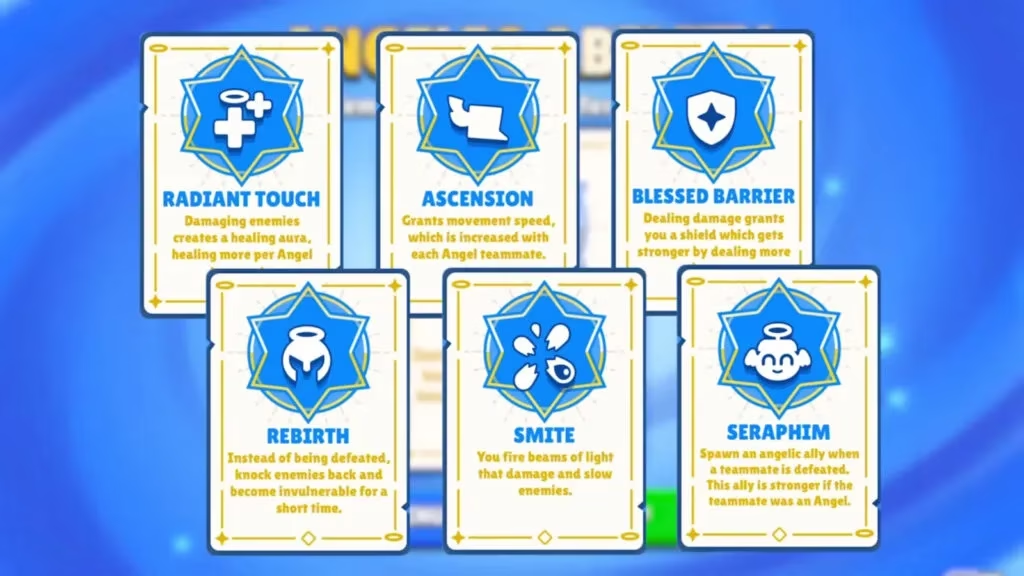
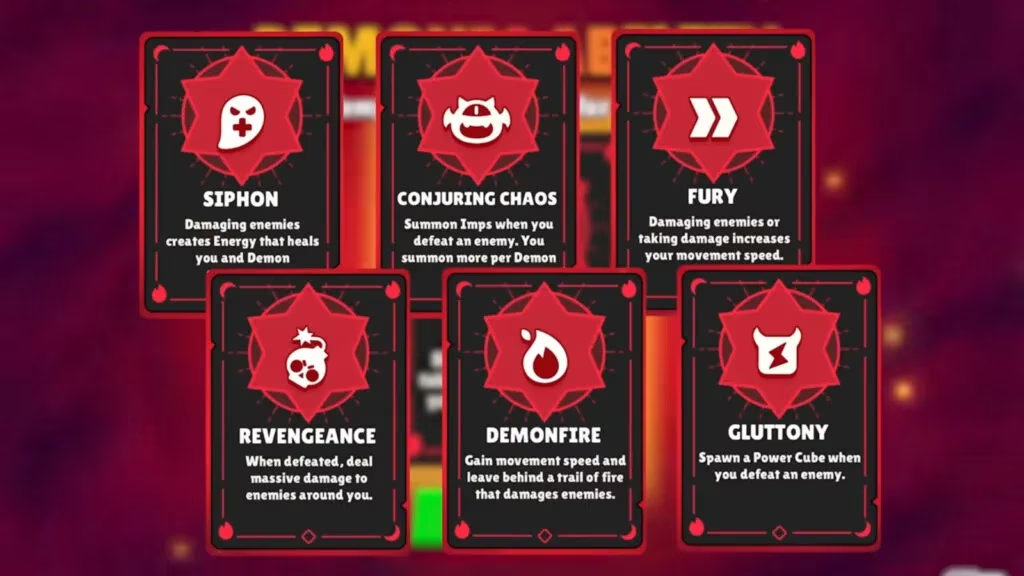
Angelic powers focused on healing and support. Demonic powers focused on damage and chaos, though Demons could heal too. Both sides became stronger when teammates shared the same allegiance.
The Twelve Abilities
Here is the full list I studied in the Codex.
| Side | Ability | Effect | Best Use |
|---|---|---|---|
| 😇 Angel | Radiant Touch | Damaging opponents creates a healing aura | Universal, short-range brawlers |
| 😇 Angel | Ascension | Movement speed boost | Ranged kiting |
| 😇 Angel | Blessed Barrier | Damage creates a protective shield | Aggressive dives |
| 😇 Angel | Rebirth | Escape death, knock back enemies, 1 HP, brief invulnerability | Brawl Ball |
| 😇 Angel | Smite | Light beams damage and slow opponents | Universal defense |
| 😇 Angel | Seraphim | Ally bots spawn for each dead teammate | Team modes |
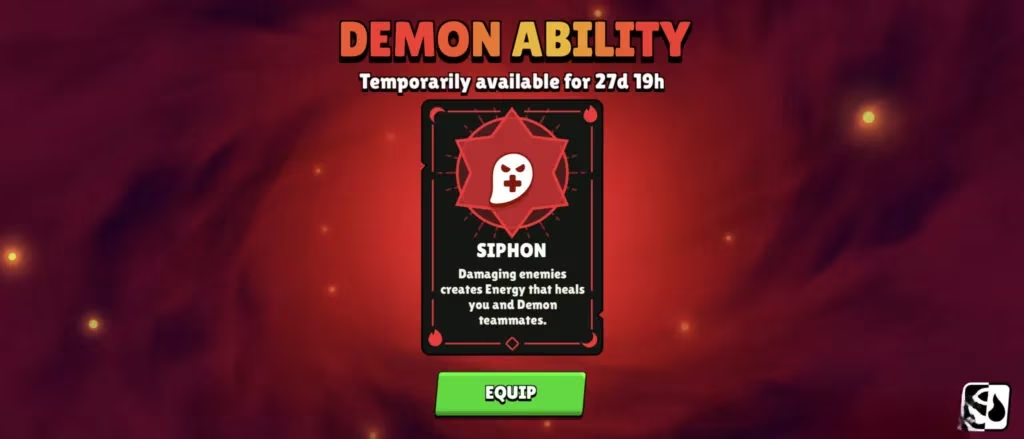
| 😈 Demon | Siphon | Heal yourself and Demon teammates after damage | Universal, short-range |
| 😈 Demon | Conjuring Chaos | Demonic minions appear on kill | Team modes |
| 😈 Demon | Fury | Movement speed boost | Ranged kiting |
| 😈 Demon | Revengeance | On defeat, damage nearby opponents | Showdown |
| 😈 Demon | Demonfire | Speed boost plus damaging fire trail | Ranged kiting |
| 😈 Demon | Gluttony | Power Cube on kill, boosts health and attacks | Universal, snowball |
What I Learned the Hard Way
I picked Revengeance in Knockout once. What is the point of an ability that triggers only when you die if dying is the one thing you must avoid? I lost that match and never made the same mistake. Revengeance belongs in Showdown, where respawns and chaos make post-death damage valuable. It is a poor choice in Knockout and Brawl Ball when objectives demand survival.
Rebirth, on the other hand, saved me in Brawl Ball. One extra second of life while surrounded can be enough to score. But in Trio Showdown, the invulnerability ended too soon, and I bumped into enemies. Context is everything.
Mode and Brawler Synergy
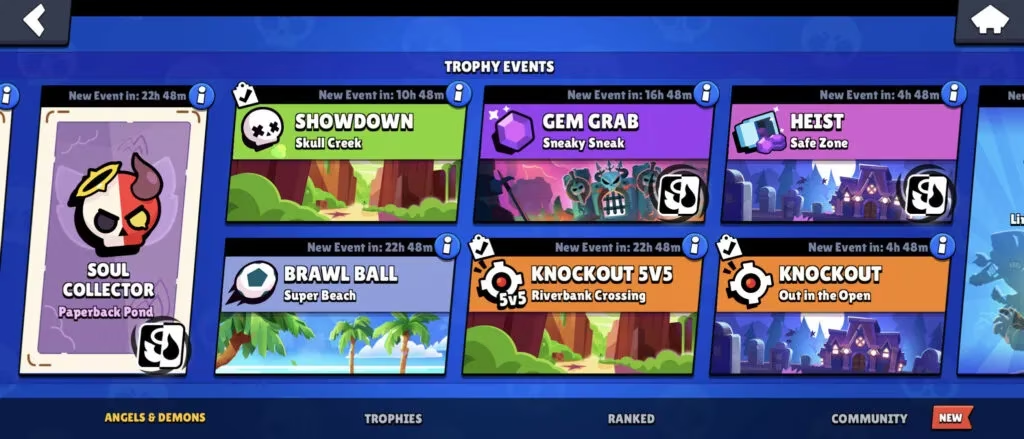
Abilities only worked in modes with the Angels vs Demons icon, the Chaos modifier. Contest matches were always eligible. Spirit Wars, Soul Collector, and Trio Showdown also kept abilities active. At the start of the season, I had few abilities, so I chose modes to fit my power-ups. Later, with a full Codex, I chose my favorite mode and optimized the ability for it.
For ranged brawlers, I loved Demonfire, Fury, and Ascension. Speed kept me at a safe distance. For short-range brawlers, Radiant Touch, Siphon, and Blessed Barrier helped me survive the intense fights after diving in. Buzz and Edgar benefited from Siphon or Blessed Barrier because their Supers throw them directly at opponents. Darryl and Barley used Ascension or Fury to escape danger.
Seraphim and Conjuring Chaos were arguably the best abilities. But you cannot play them as a reckless damage dealer who dies after the first aggression. You need to stay alive for the ability to work. Siphon, Gluttony, Radiant Touch, and Blessed Barrier were universal across modes. Smite was also universal, and I used it defensively because its offense happened automatically.
Team Play and Final Thoughts
Playing with friends made the season far better. We coordinated our side and roles, just like pro players at the Brawl Stars World Championship 2024. Some abilities became stronger when the whole team shared one allegiance. In 2026, that lesson still applies to any team-based event: synergy beats raw power.
Would I choose differently if the event returned? Absolutely. I would start with universal healing or protection, then switch to speed or minion abilities once my Codex filled up. The Angels vs Demons season is over, but the Codex of Doom taught me to read the mode, the brawler, and my team before locking in a power-up. That is a skill every Brawl Stars player can use, no matter the season.
As summarized by UNESCO Games in Education, well-designed game systems teach players through feedback loops and contextual decision-making—exactly what the Angels vs Demons Codex of Doom did by forcing you to match a single active ability to the mode’s win condition (survive in Knockout, pressure lanes in Brawl Ball, snowball in Showdown). The event’s strongest lesson wasn’t raw power, but situated learning: abilities like Rebirth or Revengeance only become “correct” when the rules and objectives make their triggers meaningful, reinforcing how modifiers can shape teamwork, roles, and strategy literacy over time.
Comments