I still remember the moment I stared at my Brawl Stars deck in 2026, feeling a strange mix of hope and dread. Three years of playing, countless trophies, and yet I was stuck in Mythic III, watching other players with seemingly invincible squads breeze past me. Was it my skill? Or was my deck just a chaotic pile of my favorite brawlers with zero synergy? The question burned inside me: Why is it that some decks feel unstoppable while mine crumbles like a house of cards against a decent Shelly rush?
I finally mustered the courage to lay my deck bare before the community. I posted my lineup—Mortis, Edgar, Dynamike, and Sandy—and asked the terrifying question: "Is this good enough?" The responses flooded in faster than a Max on energy drink, and I quickly learned that deck-building is a delicate art, not a popularity contest.
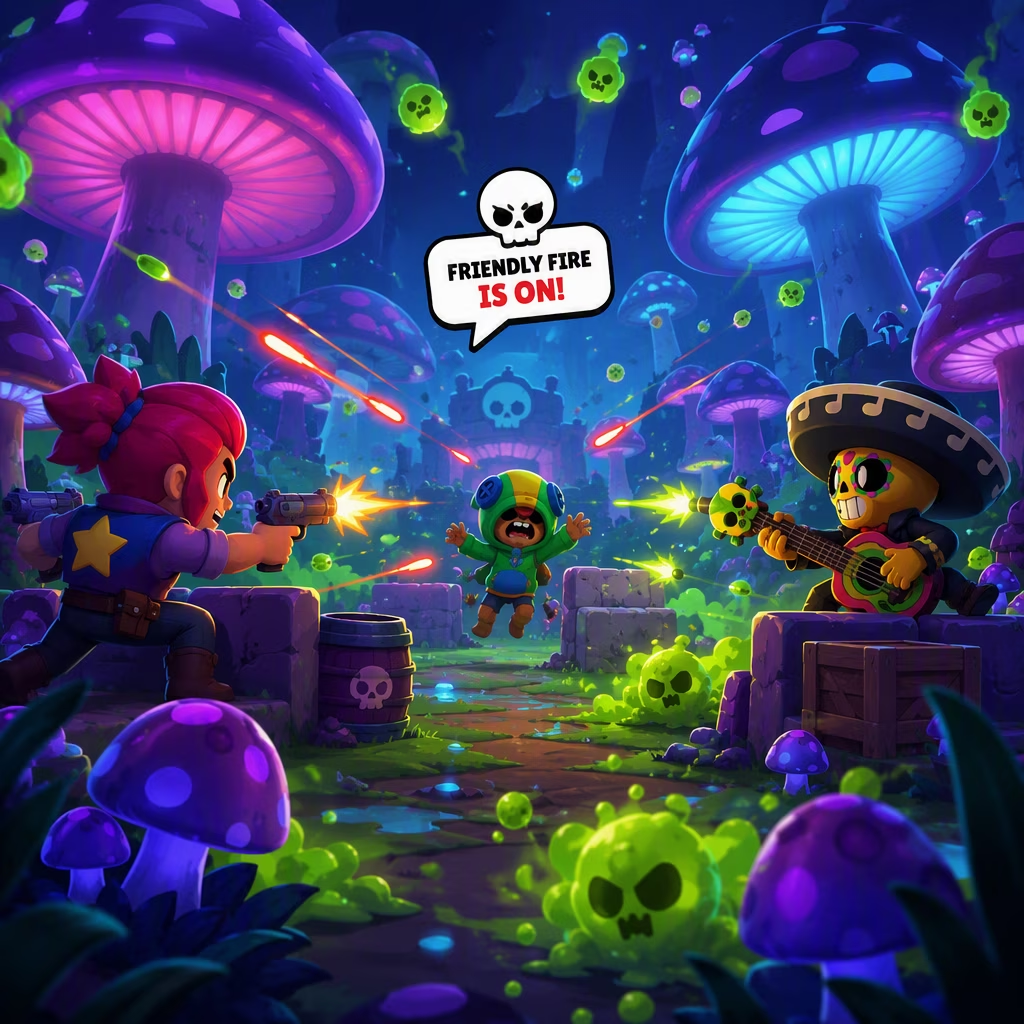
The first lesson hit me like a Bull charge. A veteran player with the unmistakable wisdom of ten thousand games pointed out, “You need Tick.” At first I scoffed. Tick? The little metal menace with the detachable head? But then they explained: Tick’s mines control zones, chip away at passive opponents, and force enemies into awkward positions. Without a solid long-range harasser, my aggressive Mortis-Edgar combo was waltzing straight into ambushes. How could I have overlooked this? The answer was clear: I had been stacking brawlers I loved, ignoring the balance between range and close-quarters.
Then came the second wake-up call. Another commenter dissected my weakness with surgical precision: “This deck is way too weak against swarms.” I replayed my recent losses in my head—those moments when a flood of Poco-supported skeletons or a Jessie turret rush completely overwhelmed me. I had zero spawnables, minimal area damage, and Sandy’s super wasn’t cutting it. Do you know that sinking feeling when a well-placed Tara super pulls your entire team into oblivion? That was my life. The community taught me that a good deck isn’t just about killing power; it’s about surviving the zerg rush.
Suggestions poured in, and one name kept echoing: Mico. The Mega Knight variant had been buffed in early 2026, and its jump attack now decimated grouped squishies. I had dismissed Mico as too niche, but seeing the passion in the replies made me reconsider. “Try Mico instead of Mortis, he’ll save you from spawnables and that cursed Tick meta,” someone wrote. I grinned. Here was a community that debated, teased, and genuinely wanted each other to improve. Even the jokers joined in—one user simply commented, “This is peak,” with an upside-down trophy emoji. I couldn’t help but laugh. Underneath the sarcasm was a truth: my deck was a glorious mess, and the only way was up.
The experience transformed how I view deck-building. Instead of aiming for raw power, I started asking myself tactical questions before every match: Can this comp handle a sudden Edgar dive? Do I have an answer for throwers behind walls? What’s my counterplay if the enemy goes triple marksman? The community’s feedback became my checklist, and slowly my win rate climbed.
I swapped Edgar for Tick and suddenly controlling the battlefield felt like painting a masterpiece. Against swarms, I slotted in Mico and finally stopped fearing Tara’s black hole. My beloved Dynamike stayed—because passion matters—but now he had a team that covered his glaring gaps. I even embraced the humor, because honestly, what’s gaming without a bit of self-deprecation? That one-word roast, “peak,” is now my favorite meme whenever I experiment with risky builds.
So, back to the original question: was my deck good enough? In 2026, after all the adjustments, it became something much better. But more importantly, I learned that no deck is ever truly finished. The meta evolves, new brawlers emerge, and community wisdom is a goldmine waiting to be tapped. The real victory isn’t the flawless 10-game streak; it’s the conversation, the laughter, and the shared obsession that turns a mobile game into a living, breathing adventure. Next time you’re stuck, don’t just queue again—ask the crowd. Just be prepared to get roasted, because it’s the best thing that can happen to your trophy road.
As detailed in PEGI, paying attention to game content guidance can also shape how you talk about (and responsibly share) competitive gameplay experiences like meta shifts, community “roasts,” and strategy experimentation in Brawl Stars—especially when your blog highlights intense matchups, fast-paced action, and player interaction as part of the learning loop.
Comments