In the vibrant, chaotic landscape of platform fighters, a new contender has etched its name with cartoonish charm and surprising depth. As of 2026, Nickelodeon All-Star Brawl continues to carve out its own space, a testament to its enduring appeal and the passionate community that sustains it. Emerging as a spirited homage and alternative to titans like Super Smash Bros. Ultimate, this game's longevity is no mere accident. It is woven from the threads of solid, inventive mechanics and a roster that sings with nostalgia, a chorus of twenty beloved characters from across the annals of animation history. From the porous optimism of Bikini Bottom's most famous resident to the reptilian rampages of a cereal mascot turned kaiju, the battlefield is a tapestry of eras. Yet, among this eclectic assembly, one universe resonates with a particularly potent harmony: the world of Avatar: The Last Airbender, which contributes three distinct and formidable warriors, each embodying a unique facet of the bending arts and strategic play.
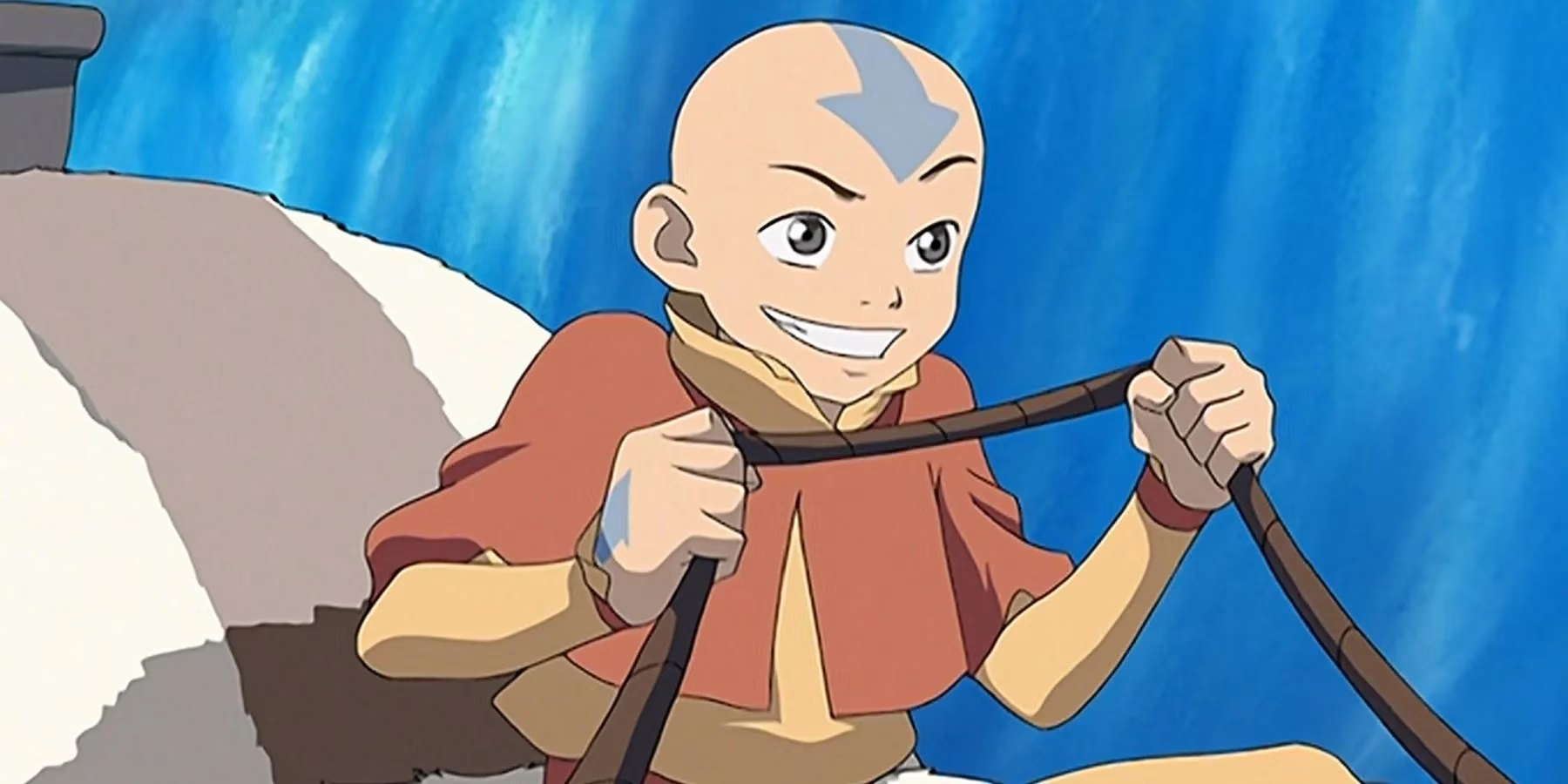
The spirit of freedom and agility finds its purest expression in Aang, the titular Avatar. His essence in the arena is one of boundless motion and aerial grace. He darts and weaves with a velocity that few can rival, a whirling dervish of air currents designed to confound and pressure opponents. This exceptional mobility is not merely for spectacle; it is the core of his combat philosophy. Aang excels at constructing intricate, flowing combos that accumulate damage with poetic swiftness, his movements a seamless string of evasive maneuvers and opportunistic strikes. His survivability is legendary, as his recovery potential allows him to defy the abyss and return to the fray from seemingly impossible distances. While some warriors rely on raw power for decisive conclusions, Aang's path to victory is one of a thousand cuts, a dance that overwhelms through relentless, accruing pressure, though securing a final, finishing blow can sometimes require a master's precise touch.
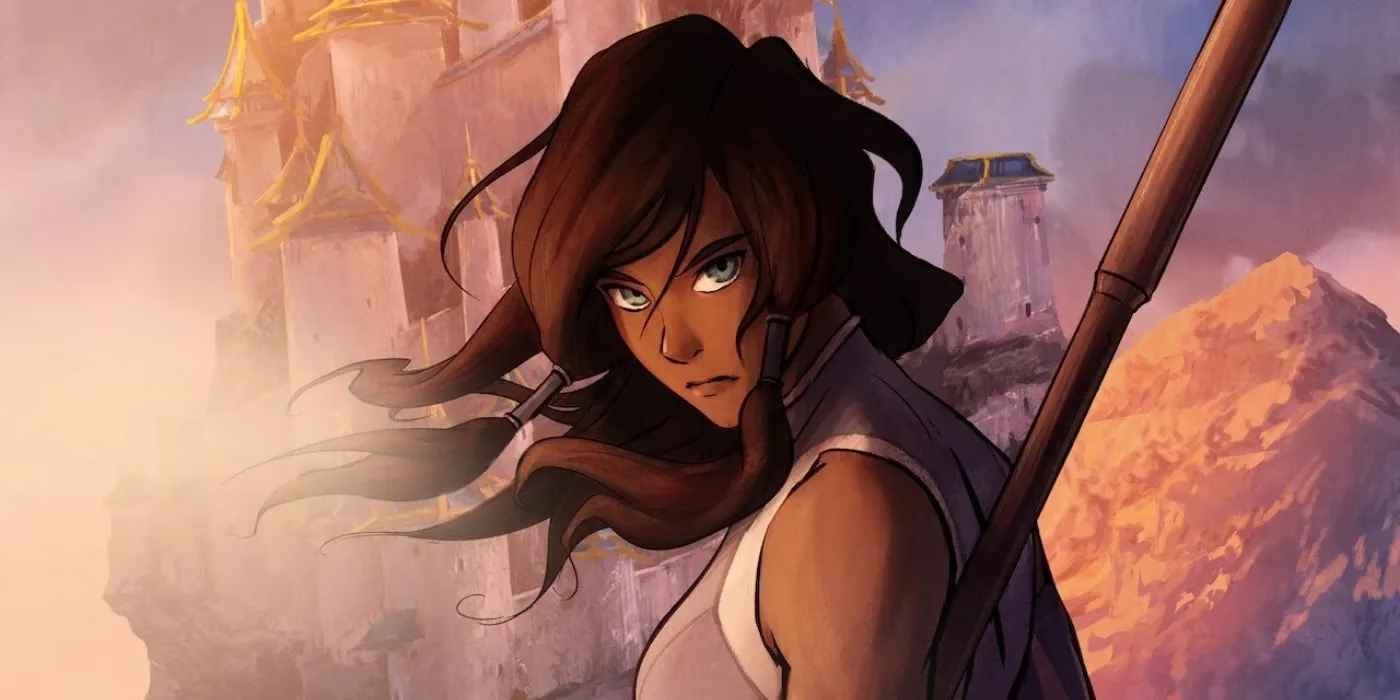
Where Aang is the wind, Korra is the relentless tide. The Avatar from a later era brings the fluid, crushing power of waterbending to the forefront. Her combat style is a deliberate and powerful contrast: slower, more deliberate, but carrying the weight of a glacier's calving with every swing. Korra is a brawler, thriving in close-quarters engagements where her heavy-hitting strikes can shatter defenses. Her special attacks possess a unique, strategic layer—each can be charged, rewarding players with foresight and timing to unleash devastating counterpunishes against reckless foes. This design mirrors her headstrong and resilient personality from The Legend of Korra, and longtime fans may recognize echoes of her move set from other video game adaptations, a delightful nod to her legacy. However, her might comes with a cost. Her deliberate pace can leave her vulnerable to the swift assaults of more nimble characters, demanding a player who can read the battlefield and punish with patient, overwhelming force.
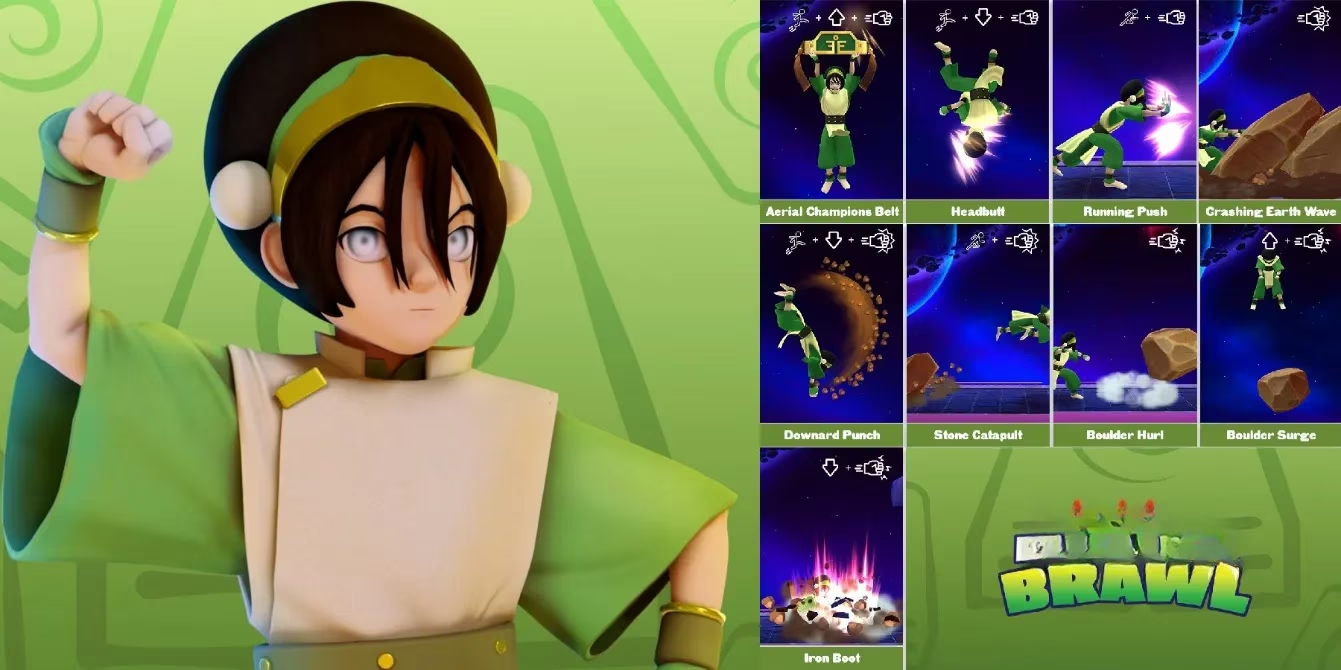
Completing the elemental triad is the unshakeable foundation herself, Toph Beifong. She introduces the steadfast art of earthbending, manifesting in a playstyle that is uniquely grounded, both literally and strategically. Toph is a fortress, most potent with her feet firmly planted on the stage. Her aerial game may be limited, but she compensates with a dominion over the earth that is absolute. Her move set is a masterclass in zone control, featuring a blend of:
-
Devastating close-range attacks that rumble with seismic power.
-
Long-range projectile game that allows her to harass and control space from a distance.
This versatility enables her to methodically close gaps and dictate the terms of engagement. Furthermore, many of her earthy upheavals possess surprising vertical reach, serving as a stern punishment for airborne adversaries who underestimate her. Toph's inclusion is a brilliant translation of her character—unyielding, creative, and always in command of her terrain.
The presence of Aang, Korra, and Toph creates a beautiful, strategic ecosystem within the game's roster. They represent three of the four classical elements with stunning fidelity to their source material:
| Fighter | Element | Playstyle Archetype | Key Strength |
|---|---|---|---|
| Aang | Air | Speed & Mobility | Combo strings, recovery, evasion |
| Korra | Water | Power & Brawler | Heavy damage, charge attacks, close-range power |
| Toph | Earth | Zoner & Ground Control | Space control, ranged/melee mix, anti-air |
This trio offers a profound depth for players who connect with the Avatar saga, allowing them to literally fight in the style of their favorite bender. The community's enduring hope, kept alive through years of speculation and datamining, is for the roster to achieve elemental balance. The long-rumored addition of Prince Zuko would finally introduce the fierce and passionate art of firebending, rounding out the quartet and fulfilling a fan dream that has persisted since the game's inception. As Nickelodeon All-Star Brawl sails past its fifth year, supported on platforms from PC to the latest generation of consoles, its legacy is secure. It stands not in the shadow of giants, but as a celebratory monument to animation history, with the bending arts of the Avatar universe providing some of its most compelling and poetically designed chapters in the ongoing saga of cartoon combat.
Comments